Jalen Brandl’s journey from a summer baseball injury to a safe return to the field.
July 19, 2026, was the kind of summer day made for baseball. Temperatures climbed into the mid-eighties, and the smell of freshly cut grass lingered in the air. The Sleepy Eye Junior Legion team took to the field for warmups prior to their substate playoff game against Ruthton.
Fifteen-year-old Jalen Brandl was doing something he’d done countless times before: pitching to a teammate in the batting cage.
That’s when it happened.
Jalen threw a pitch, the bat connected, and a line drive came screaming back toward him. By chance, the ball zipped past the protective net and struck him in the face. He went down on impact.
“I remember laying there with a bunch of people around, but that’s about it,” Jalen said.
What happened next underscored the importance of recognizing and responding quickly to a head injury—especially for the coaches and parents caring for young athletes.
A nurse and EMT who happened to be at the game assessed Jalen immediately and recognized the seriousness of the injury. Within minutes, an off-duty police officer who was coaching the opposing team transported Jalen to Avera Tyler Hospital in his personal truck, with a police escort for additional caution.
This quick response was especially appreciated by Jalen’s parents who had not yet arrived at the away game.
At the hospital, Jalen underwent a full trauma evaluation, EKG and CT scan. Thankfully, imaging did not show signs of an acute brain injury, but he sustained three orbital fractures, two nasal fractures and a concussion.
Before long he began vomiting, another concerning symptom following a head injury.
Doctors decided to keep Jalen overnight for continued neurological checks and observation.
The next day brought another concerning symptom: double vision.
“He was so lethargic,” recalled his mom, Ariel Brandl, a physical therapist at Sleepy Eye Medical Center. “He didn’t even care that he didn’t have his phone. I knew his brain needed its rest.”
Jalen was discharged on Monday and returned home to rest.
For a teenager, especially one who lives and breathes athletics, rest is not the norm. But this was not the time to push through.
When Recovery Became the Priority
The following day, Jalen saw his primary care provider, Dr. Adam Armbruster, at SEMC for continued evaluation and monitoring.
He was still experiencing double vision and had also noticed an orange hue to his vision. That prompted a trip to Sioux Falls, where he was evaluated by an ophthalmologist and ocular plastics and orbital surgeon.
Thankfully, his eye itself was okay. The swelling around it had caused the eye to sit at an unusual angle, resulting in several uncomfortable vision-related symptoms.
“My brother Kolson called it my zombie eye,” Jalen said with a laugh.
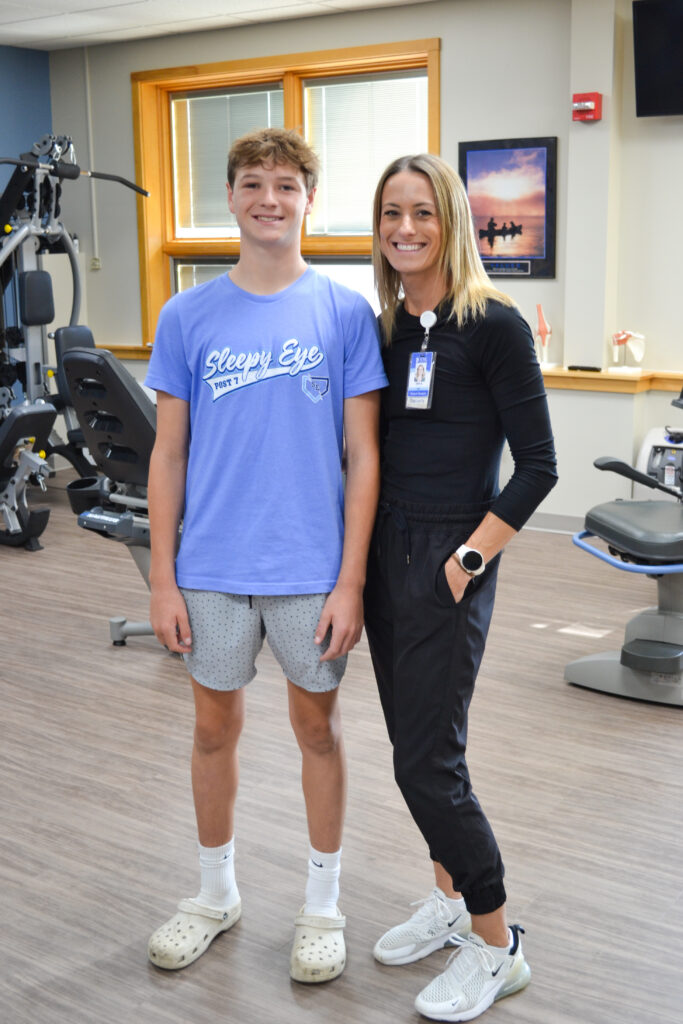
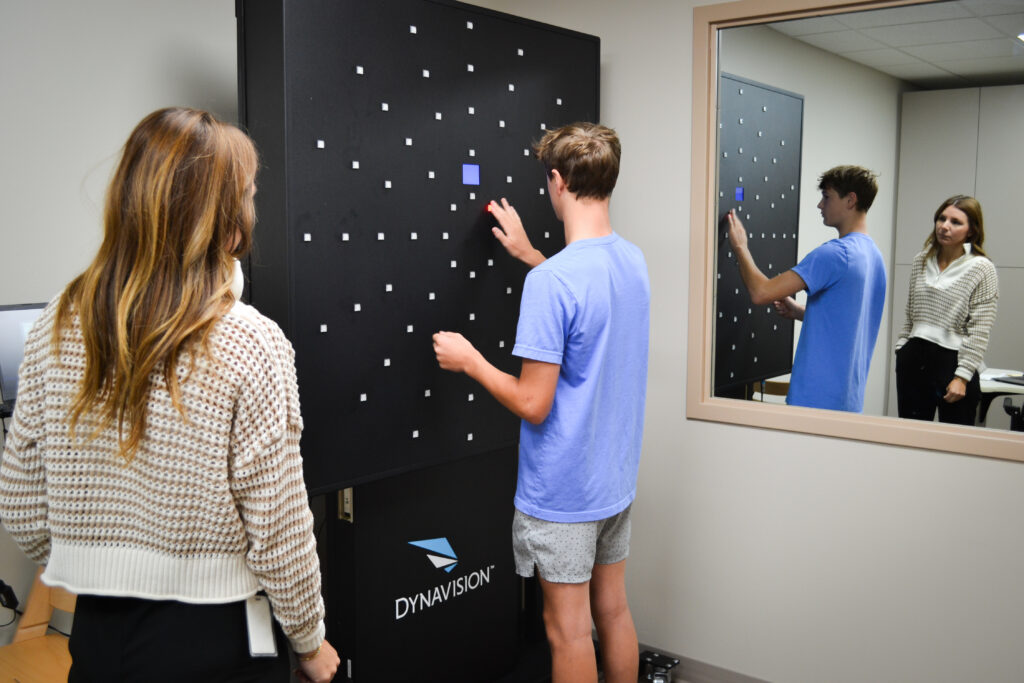
Around day five his swelling subsided enough for him to open his eye again. At this point, he began occupational therapy with Abby Schwartz, OT, at SEMC.
Therapy focused on visual acuity, reaction time and other skills that helped Jalen safely rebuild his coordination and response. He continued therapy twice a week for two and a half weeks, along with a follow-up appointment in Sioux Falls for ongoing evaluation.
“Concussion recovery isn’t just about waiting for symptoms to go away,” Schwartz said. “We were looking at how Jalen’s vision, reaction time, balance and ability to process information responded as he increased his activity. The goal was to challenge his system appropriately without pushing him beyond what he was ready for.”
“Some of those exercises were challenging,” Jalen said.
But each challenge was another step forward in Jalen’s Return to Play process—a gradual progression designed to help athletes increase activity while monitoring for the return or worsening of concussion symptoms.
For more information on concussions as well as an overview of Minnesota’s Return to Play requirements for school-sponsored sports, summer sports considerations and the Return to Play progression, see the Q & A section at the bottom of this page.
Ariel was familiar with the process through her work as a physical therapist. This time, however, she was navigating it as both a healthcare professional and parent.
“We started with walking to the end of the block and back,” Ariel said. “We kept building on this—as long as he didn’t have any symptoms while doing it and handled it well.”
The walks eventually became longer. Then came jogging with dad, which eventually turned into batting practice with dad, first off the tee, then in the cage.
Little by little, Jalen was regaining strength and returning to the athlete he was prior to injury.
His recovery was a team effort and required more than time. From his primary care provider and specialists to occupational therapy and his family, each played an important role in helping him move forward safely.
A Date on the Calendar
All the while, there was a date circled on the calendar.
The Junior Legion State Tournament was scheduled to begin on August 6.
At first, making it back in time seemed unlikely.
“Initially, we thought he’d be out longer, We do not think he would even be ready to start football at the beginning of the season,” Ariel said.
But Jalen kept progressing.
After completing his Return to Play progression and receiving medical clearance to play non-contact sports by the plastic and orbital surgeons, Jalen returned to baseball. (He could resume full-contact sports, like football, at four weeks post-injury.)
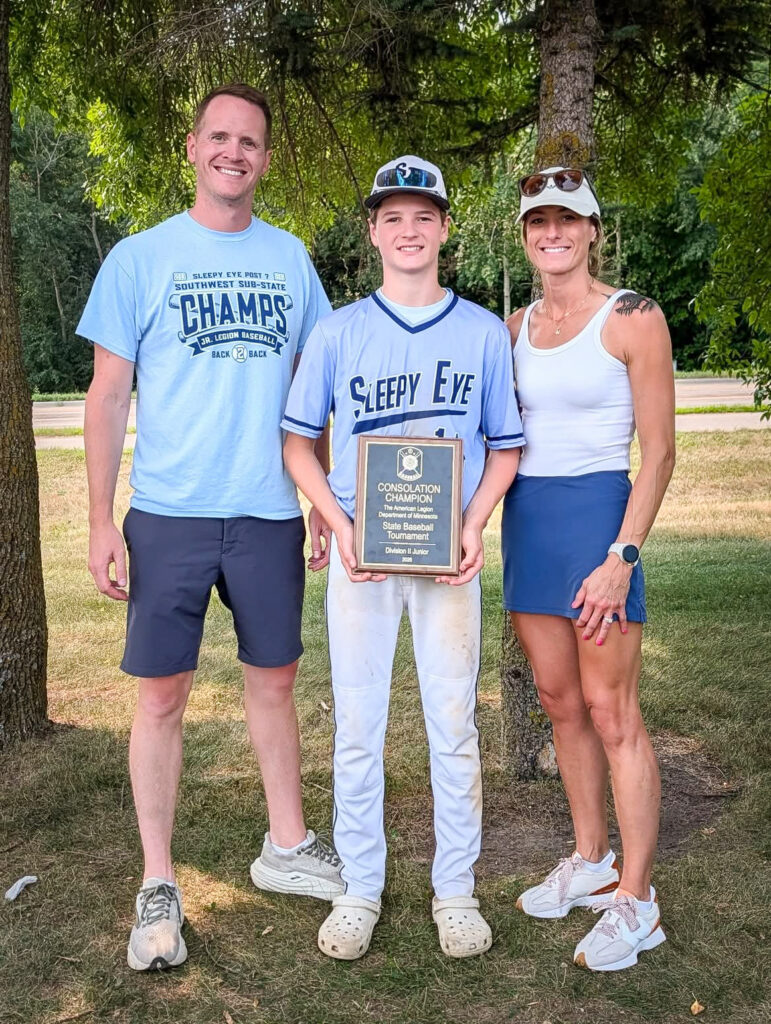
He played in all three state tournament games, either running or as a designated hitter.
“As a mom, it is very difficult to watch your child be injured, but more difficult to have to watch them sit out of something that they love doing,” Ariel said.
With such a competitive athlete eager to return, Ariel knew there was a balance between supporting Jalen’s desire to play and doing what was objectively best for his health.
“I had to recognize the work that he had put in and trust him as an athlete, while also making sure he didn’t return too soon and risk further injury.”
And then came the moment most parents can understand.
“I’m positive that Jalen—as well as the whole crowd—could hear my heartbeat the first time he got up to bat again.”
More Than a Knock
A concussion isn’t simply something an athlete can “shake off.”
Symptoms can change over time, and recovery can look different for every athlete. Feeling better doesn’t necessarily mean an athlete is ready to return to competition.
Jalen’s experience illustrates why.
His initial imaging was reassuring, but his symptoms continued to evolve. His recovery wasn’t measured simply by the number of days after his injury. It was measured in small steps: resting, walking, working on visual skills, jogging, practicing and, eventually, returning to competition.
Schwartz saw measurable progress during Jalen’s occupational therapy.
“In just that short time frame, Jalen was able to improve his reaction timing by .40 seconds. In other words, the amount of time it took him to physically react to visual stimuli decreased by 33.3%,” Abby said. “This improvement matters not only for athletic performance, but for safety. Athletes need to quickly see, process, decide and respond to changing information.”
For parents and coaches, knowing what to watch for after a head injury can be just as important as knowing what to do when the initial injury occurs.
And for athletes, perhaps the hardest lesson is also the simplest: recovery takes patience.
When asked what advice he’d give another athlete recovering from a concussion, Jalen’s answer was simple.
“Sleep and keep your head up. There are a lot of people here to help you.”
As another school year begins and fall sports get underway, Jalen’s experience offers an important reminder: getting back in the game isn’t about getting back as quickly as possible. It’s about getting back safely.
For parents and coaches, knowing what to watch for after a head injury—and knowing when an athlete is truly ready to return—can make all the difference.
Q & A: What Parents and Coaches Should Know About Concussions and Return to Play
What are the symptoms of a concussion?
Symptoms can include headache, dizziness, nausea or vomiting, blurred or double vision, balance problems, confusion, difficulty concentrating or remembering, unusual fatigue, slowed thinking or speech, and changes in mood or behavior. Symptoms may appear immediately or develop over time.
What should I do if I suspect my athlete has a concussion?
The athlete should be thoroughly evaluated by an appropriately trained healthcare provider right away (athletic trainer, nurse, provider, or appropriate health care professional) and follow their guidance for returning to school, daily activities and sports.
What does Return to Play look like?
The Return to Play progression program is a gradual, step-by-step process. Once an athlete is ready, they gradually increase activity, moving from regular daily activities to light exercise, more vigorous activity, sport-specific drills, practice and, eventually, competition. Each step should take at least 24 hours, and the athlete should only advance if symptoms do not return or worsen.
Do the rules differ for school and summer sports in the state of Minnesota?
Minnesota’s concussion requirements apply specifically to school-sponsored sports. Summer leagues and other youth sports programs may have their own policies, but regardless of the setting, a medically guided, gradual return to sport is strongly encouraged.
For Minnesota school-sponsored sports, state law (subject to change) requires athletes with a suspected concussion to be removed from play and not return until they are symptom-free, evaluated by an appropriately trained healthcare provider and given written permission to return.